How Your Self-Talk Is Secretly Increasing Your Stress
By Coach Jeetu Sharma
Start paying attention to the way you speak to yourself. When you notice a negative thought, ask yourself whether you would say the same thing to someone you care about. If the answer is no, try rephrasing it.
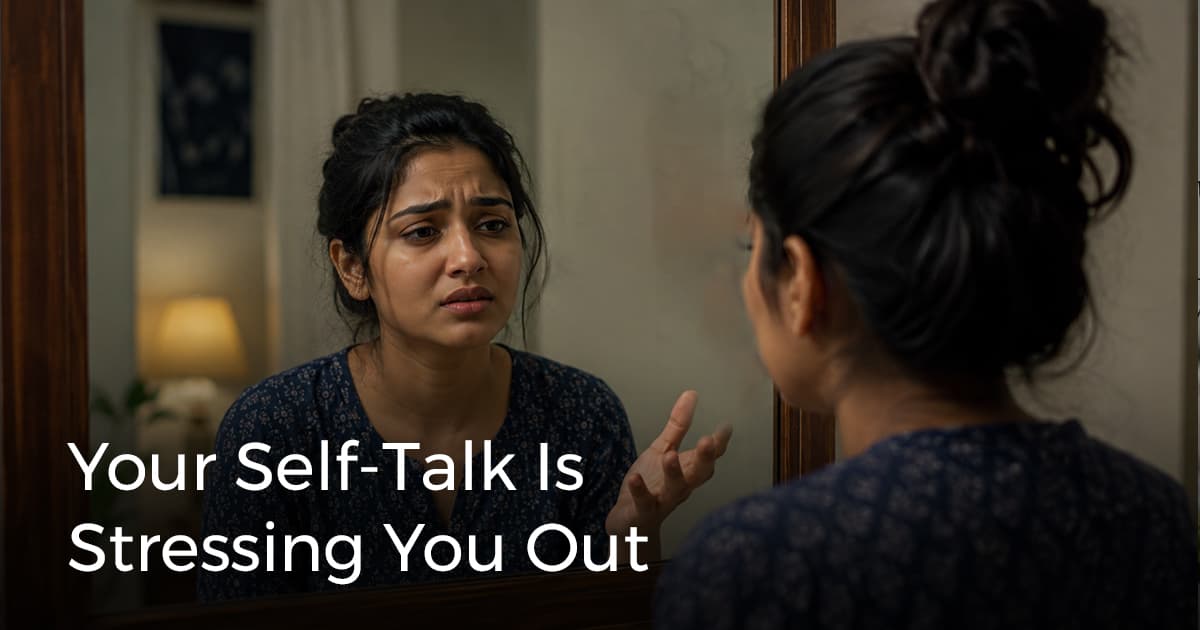
Have you ever had one of those days where nothing seems to go right, and your mind keeps reminding you of it?
Maybe you missed a deadline, made a small mistake, or didn't perform as well as you hoped. Before you know it, a voice inside your head starts saying things like, "Why do I always mess things up?" or "I'm never going to be good enough."
The surprising part is that these thoughts might be creating more stress than the actual situation itself.
We all talk to ourselves throughout the day. This inner conversation, known as self-talk, influences how we feel, react, and handle challenges. When that self-talk becomes overly critical, our stress levels naturally rise. Imagine having a friend who constantly pointed out your mistakes and doubted your abilities. It would be exhausting, right? Yet many of us speak to ourselves in exactly that way.
Your brain doesn't always distinguish between an external threat and a negative thought. So when you repeatedly tell yourself that you're failing, falling behind, or not good enough, your body responds with stress, anxiety, and tension.
The good news is that you can change this pattern.
Start paying attention to the way you speak to yourself. When you notice a negative thought, ask yourself whether you would say the same thing to someone you care about. If the answer is no, try rephrasing it. Instead of "I can't do this," try "This is difficult, but I can figure it out." Instead of "I'm a failure," try "I'm still learning."
Small changes in your self-talk can have a big impact on your mental well-being. The goal isn't to be positive all the time—it's to be fair, compassionate, and realistic with yourself.
Sometimes, the most powerful stress-management tool isn't changing your circumstances. It's changing the conversation happening inside your head.